



Hey!
I’ve been meaning to write about this for some time, but I’ve been holed up in my home office creating Adventures in SEO for the past 4 months and am just now finding time to breathe!
I get emails ALL THE TIME from bloggers who want advice on Pinterest. I get great traffic from Pinterest + Google so I wanted to share some tips as to what does and doesn’t work for me.

Adventures in SEO is the FIRST course to combine effective Google and Pinterest SEO Strategies into one. This course explains everything in a straightforward step-by-step manner with videos, checklists, and written guides to help you apply the principles along the way.
Enrollment opens a couple times per year. Get on the waiting list to find out when it reopens. We hope to see you there!
Click here to join the waiting list >>
I don’t know about you, but I don’t have any extra time during the week to waste spinning my wheels. I only want to do the things that work and drop the things that don’t. Speaking of hurrying up, I’m gonna see how fast I can write this because I have to leave in 35 minutes to go get my kids in carpool!
Ok here goes…
3 Things You Can Basically Stop Doing Right Now
If you want better long term results on Pinterest and less overall work, there are some things I highly recommend you stop doing / re-evaluate to make sure they are the right thing for you.
1) Focusing on group boards to the detriment of personal boards
Personal boards can be every bit as powerful as group boards. Let me put this another way – you DO NOT have to be on ANY group boards to have a successful Pinterest strategy. In fact, group boards are not a strategy; rather, they are a tool to leapfrog over the hard part of building up your own presence…a tool that can be stripped away at any moment at the whim of a group board owner who no longer wants to have contributors.
The most important factor for a board is how Pinterest sees that board. My highest performing boards across the years, according to Pinterest analytics, are a mix of personal and group boards, with MY personal boards being the strongest for ME.
I believe that’s because I’ve spent so much time curating my boards on niche topics with a variety of content…giving Pinterest so much data on certain boards that there is no question that everything on them is relevant to the topic at hand.
But you’re probably wondering….“Why does everybody say to join group boards?”
To me, the reason is clear. If you are a new pinner, established group boards can give you a leg up for this very reason…they have established authority within Pinterest and you can piggy back on this success. This is how someone can say, “I just started blogging 6 months ago and now I have 100,000 page views per month!”
Sure, this is fine and dandy, but how can you justify spending all your energy on a platform you don’t own (Pinterest) utilizing a stage you don’t control (someone else’s group board)?
You CAN, but does that make it the best option for you over the long haul? It’s too risky for me.
I’m a CPA. CPAs are trained in risk mitigation. We invest in one thing and hedge our bets with the opposite thing. We make 7 prudent decisions before taking 1 big leap. There’s ALWAYS a safety net in business finance. That’s how some corporations manage to last for over 100 years no matter who is running them.
In a scenario that relies on group boards, NOTHING is under your control.
I don’t know about you, but I don’t like giving someone else control over my destiny. Relying on a group board owner to have MY best interest at heart is not the way I structure my business, and my team needs to get paid even if someone else decides to delete their group board.
Formulating a strong personal board plan takes time & energy and is probably slower moving than most people would like to entertain, but I believe this is the way it has to be for long term success on Pinterest.
Over time, curating your own highly relevant boards works in your favor because 1) you own the real estate (i.e. no one can delete the board and strip away your high performing pins) and you can pin whatever you want to those boards. The only risk at that point is whether or not Pinterest will continue to be a great source of traffic and if they allow you to keep pinning (both things I’m comfortable betting on right now). 🙂
My recommendation is to join as many group boards as you want, but don’t base your entire Pinterest strategy on them. Curate your own authority boards as well.
2) Not understanding the true source of some Pinterest traffic!
This is a big one. It’s a truly unknown secret that I think the world needs to know. The Google game is a way better game to play for long-term sustainable traffic that no one can steal from you and that doesn’t die down easily.
I made a quick video (under 5 minutes long) that shows you what I mean! It’s not a complicated concept, but knowing this is gonna flip your WHOLE perspective on Pinterest and the true game you’re playing.
If these types of nerdy insights make your day, make sure to sign up for the waiting list for Adventures in SEO, which opens up for enrollment several times a year and is led by yours truly!
Join the Adventures in SEO waiting list here >>
Ok, so I got this far…..be back after carpool!!
{after carpool} 🙂
3) Using non-niche chore threads to boost traffic
There are many moving parts to the Pinterest algorithm. Pinterest makes changes constantly, testing new format, bringing back old ones to compare results, changing their minds on how pins are ranked, categorized, and presented to pinners….all in the name of user experience.
Our #1 job is to help Pinterest recognize that our pins are the BEST pins for any given individual Pinner or Pinterest search. I didn’t make this up – you can read all about this on the Pinterest Engineering blog.
Pinterest has said that RELATED PINS drive over 40% of all saves + impressions and is one of the primary discovery mechanisms on the website.
In our quest to get Pinterest to believe our pins are related to other relevant, high performing pins, we should stay as much on topic as possible when it comes to which boards our pins appear on and how we label them with contextual clues like meta descriptions, pin descriptions, alt text, and even our blog post titles.
Gone are the days when you could simply pin and have your content seen in a real time chronological feed with your pins shown to your followers. We’ve gotta be more strategic than that.
While there are benefits to keeping your pins active, participating in a chore thread with a bunch of bloggers who may or may not pin your content to irrelevant boards doesn’t benefit you much in the long run. If anything, you’re just confusing Pinterest when say, a beauty blogger pins your budgeting pin to a board called “things I like” and 99% of their other pins are about beauty, so Pinterest gets some clues that someone interested in beauty likes your content and maybe your pin is kind of about beauty because it’s on a board with a bunch of other beauty tips…..
Perhaps that’s an extreme example, but you get what I mean.
Pinterest needs clues about our content. And then the best content wins. That’s pretty much the game in a nutshell.
In the end, you’ll get more traffic and be able to follow a much less hectic promotional plan based on facts rather than waste your time repinning random content. Having someone pin your content to an irrelevant board is the real life equivalent of walking out your front door and shouting “I have a new post everybody! Go see it!” and then doing the same thing each night and hoping somebody notices. Would you rather do that or just go to a small meetup of enthusiasts interested on your topic, and then give them exactly what they’ve been looking for?
Optimizing for what Pinterest actually cares about so it can figure out who to show our pins to is a MUCH better use of our time. I know you have better things to do – like spending time with your children or even finalizing that product you’ve been saying you were gonna make for the past 6 months. I know because that used to be me!
If you’re wondering, here are some of the things that Pinterest truly cares about:
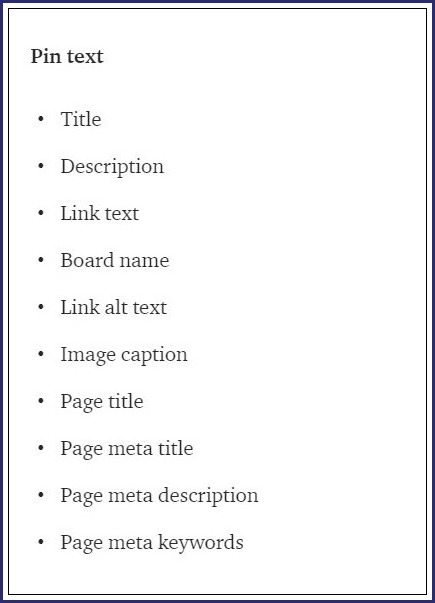
image source: Taste Graph Part 1, Assigning Interests to Pins | Pinterest Engineering
Furthermore, they’re worried about figuring out what people are searching for. Doing this same analysis from the blogging end of things is also a better use of time than non-niche chore threads:
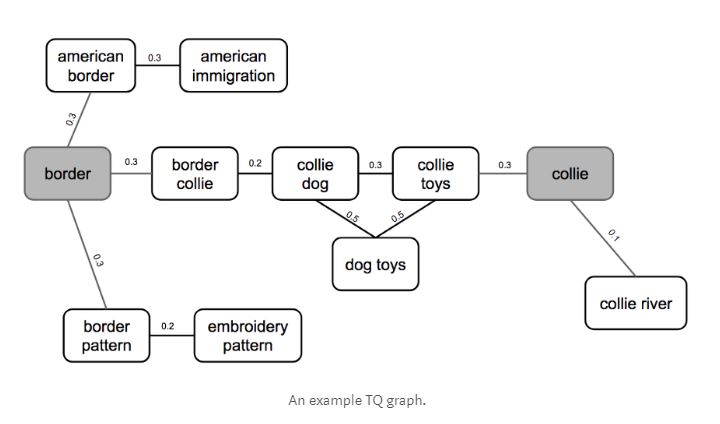
image source: Pinterest Engineering
Understanding things like the graph above is the key to great Pinterest traffic without trying so hard, and not doing chore threads with other bloggers.
If you insist on participating in pin for pin threads, then I recommend forming a group of tightly-niched bloggers and all agree to keep the pinning on topic to relevant boards. Either through the use of a secret board or Tailwind Tribes. However, keep in mind that pinning that content yourself to a highly relevant group or personal board could have the same effect…so use your time wisely.
My recommendation: Even if it seems like chore threads help your traffic, consider how much it is actually helping you and what you are giving up instead. Time with your family? Time that could be spent on creating a product? Figure out where your time is best spent and then don’t do chore threads unless it makes the top of that list.
Are you ready to dive deep into Pinterest SEO?
Figuring out how to understand the technical side of Pinterest is something that takes time. We might not be Pinterest Engineers, but we can use the platform like regular people and over time figure out how it works.
After many years of observing how Pinterest SEO works and combining it with what I know about Google SEO from the past 10 years of blogging, I have a pretty good handle on how to get content seen on Pinterest. If you would like to join me as I go behind the scenes and share how I optimize my own content for traffic from Google and Pinterest, make sure to join the waiting list for Adventures in SEO. I’ll see you in class!
Join the Adventures in SEO waiting list here >>

Sources:
- Related Pins at Pinterest: The Evolution of a Real-World Recommender System





Robbie says
Very insightful! And that TQ graph is eye opening. Thanks for showing it. I am going to do some research about TQ graphs.
Lena Gott says
Thanks, Robbie!
Becca says
My Pinterest strategy is so not there in terms of bringing in the pageviews. Thanks for the tips. I am definitely implementing more and more as I go, but I haven’t gotten to tribes yet.
Brandi Michel | FamilyFelicity.com says
Wow, wow, wow! You’ve cleared up so much for me – once again. I’ve already devoured your Traffic Transformations book and this post took me the extra mile. First, the video cleared up how traffic that looks like it’s coming from Pinterest is actually coming from Google. That NEVER even occurred to me! Next, is the BIG one… I finally got the missing piece regarding those pin for pin threads. I totally got this concept from your book, but I didn’t think about other bloggers pinning my pins to non-relevant boards. Well, that helped SO much. Thank you Lena!!
Lena Gott says
Thanks, Brandi! That means a LOT! I try to keep it real around here. Especially for the busy moms who blog and don’t have time to do anything that doesn’t move the needle forward. 🙂
Sherri says
OMG this is amazing and makes so much sense to me when I see in my analytics Pinterest.com without an actual pin number, if that makes sense?! It never occurred to me it could be from google! I will definitely share! I bought your Traffic Transformation book and loved it! Learned a ton! Look forward to Adventures in SEO! 🙂
Lena Gott says
Hi Sherry! I was so excited when I figured this out! It changes the way you look at Pinterest stats for sure.
Susie Lindau says
Things have changed again in a year. Well, Pinterest does update weekly. It’s hard to keep up! But thanks for the tips.
I thought I’d let you know that your video is set on private. I would love to take a look!
Lena Gott says
Oh thank you for letting me know! I made the video public again! 🙂